


Nations once measured their strength by counting soldiers and weapons. Today, the question “Guns or Growth? Why Diaspora Money Now Matters More Than Military Might” defines modern geopolitics. Global remittances exceed $700 billion each year, and their economic effects outweigh military interventions in shaping countries’ destinies.
The concept of “Guns or Growth? Why Diaspora Money Now Matters More Than Military Might” signals a fundamental change in international power dynamics. Diaspora communities living abroad serve as economic engines, cultural bridges, and political catalysts. These groups can transform their homelands in ways that military hardware cannot match.
This new reality changes how nations view security, prosperity, and global influence. Smart governments no longer focus solely on military spending. They create strategies to use diaspora networks, attract investments, and make use of cross-border connections effectively. Many examples prove this trend – India’s Gulf diaspora and Jewish-American support for Israel show how communities reshape international relations through economic bonds rather than military force.
What is diaspora power in today’s world?
Diaspora communities have become powerful forces in today’s world politics, though many often underestimate their influence. Their power comes from intricate networks of economic, cultural, and social influence that exceed traditional borders, rather than conventional metrics like weapons or military strength.
Defining diaspora beyond migration
The meaning of “diaspora” has changed a lot from its historical roots of displaced populations. Today’s diasporas cover much more than immigrants or refugees. They are global networks of people who stay connected to their ancestral homelands while becoming integral parts of their host societies.
These communities serve as dynamic bridges between nations. Scholars now see them as transnational social fields. Modern diasporas wield substantial influence because of their dual identity. They belong to multiple worlds and smoothly direct different cultural, economic, and political systems.
Technology has changed how diaspora communities stay connected. Digital platforms let scattered populations work together as unified groups despite being far apart. This smooth connectivity creates what we might call “virtual nationhood”—communities that keep strong collective identities and shared goals without being physically close.
Diaspora power also comes from building social and cultural capital. Members often become influential figures in their host countries as business leaders, academics, cultural icons, or political advisors. They use these positions to shape views, guide policy talks, and create better conditions for their homelands.
How diaspora is different from traditional state actors
Diaspora networks work through flexible and adaptable channels, unlike traditional state actors bound by territory and formal diplomatic routes. This key difference creates several advantages.
Diaspora groups can influence without following official diplomatic rules. State actors must follow complex diplomatic procedures and international norms. However, diaspora communities can promote their interests through civic engagement, business ties, and cultural exchanges—reaching audiences and decision-makers through many channels at once.
These networks have more credibility in host societies than foreign governments. As integrated community members, diaspora voices sound more authentic and legitimate than official foreign representatives. They shape public opinion and policy discussions effectively.
Diaspora communities can adapt their tactics quickly. State actors must keep consistent policies across all international forums. But diaspora groups can use different strategies for different situations. They respond to new opportunities and challenges without the red tape that formal government bodies face.
These networks know both their origin and host countries’ cultures and languages intimately. This dual view helps them spot strategic opportunities, communicate across cultural gaps, and build connections that national actors might miss.
The influence of diaspora communities lasts longer than traditional state power. Military strength changes with budgets, and diplomatic ties shift with governments. But diaspora connections grow stronger through generations as communities become more 20-year old and successful in their host countries.
Diaspora power shows a fundamental change in how global influence works. Economic and cultural ties now matter more than military strength for national success. Diaspora communities have become vital assets rather than distant relatives. This shift challenges old ideas about power and national security. Building diaspora relationships might bring better results than expanding traditional military capabilities.
From remittances to influence: the economic rise of diasporas

Image Source: Visual Capitalist
Global diaspora communities are reshaping international development in ways that go way beyond traditional power structures. These transnational communities build financial bridges between nations. Their economic contributions now surpass traditional development assistance and create growth opportunities where military interventions often fall short.
Global remittance flows and their scale
Diaspora financial transfers have changed the global economic landscape completely. International remittances have grown exponentially from USD 128 billion in 2000 to USD 831 billion in 2022. This is a big deal as it means that the total exceeds all Official Development Assistance (ODA) and Foreign Direct Investment (FDI) to low and middle-income countries combined.
These remittance flows remain strong even during economic downturns. They often increase during crises and act as economic buffers for vulnerable nations. Remittances to low- and middle-income countries reached USD 656 billion by 2023. This makes them the largest source of external finance to these economies since 2015.
Country-specific dependencies show an even deeper effect. Remittances make up 37 percent of Tajikistan’s GDP and 30 percent of Nepal’s. Other countries heavily rely on these funds too – Tonga (41%), Lebanon (31%), and Nicaragua (27%). These numbers show how diaspora’s financial support has become crucial to many nations’ economic stability.
Diaspora investments in home country development
Diaspora communities do more than just person-to-person transfers. They put resources into development investments. These Diaspora Direct Investments (DDI) stay more stable than traditional foreign investments, particularly during economic uncertainty.
Diaspora bonds have become powerful tools to fund large-scale development projects. Nigeria raised AED 1211.74 million through these bonds to reduce its dependence on oil revenues. These investment tools turn emotional connections into practical development funds.
Smart governments are creating official channels to work with diaspora investors. Morocco leads by example through institutions like UM6P (Université Mohammed VI Polytechnique). It supports promising founders through its investment division while running global hubs in Canada, the US, and France to connect with worldwide talent. Lebanon’s Diaspora Energy initiative links founders with global mentors and investors, providing vital support during economic challenges.
Diaspora entrepreneurship and innovation
Diaspora entrepreneurs are unique business innovators who know how to work within multiple regulatory, cultural, and economic systems at once. Sociologists call this “dual embeddedness”. This unique point of view helps them spot opportunities others might miss.
African diaspora shows this entrepreneurial spirit perfectly. Fintech platforms like France-based Afrikwity have grown to over 5,000 members since 2017. They work with more than 30 businesses and have helped secure about €10 million in funding. Uganda’s Eversend claims its services are “seven times cheaper and 1,000 times faster” than traditional banks.
These entrepreneurs are changing entire industries. Izikare lets people worldwide buy healthcare insurance for African relatives. Wizodia helps diaspora members invest in African real estate. In fashion, Youssouf Fofana’s Maison Château Rouge started in Paris’s “African village” and now sells high-end accessories made in Senegal through prestigious European stores.
Their impact goes beyond making money. Many diaspora-led businesses tackle development challenges head-on. Franco-Burkinabè company Tôtô Riibo runs an online ordering and delivery service for meals prepared by women in Ouagadougou’s informal sector. This creates local jobs and promotes economic independence. Such businesses build value chains connecting continents while solving local problems.
Why military might is losing ground
Military might was once the ultimate measure of national strength. Today, its importance continues to fade as the world changes in the 21st century. This big change affects how countries imagine security and influence globally.
Declining returns on military spending
Military spending worldwide has reached new heights, hitting AED 9.91 trillion in 2023 according to the Stockholm International Peace Research Institute. Current trends suggest this number could reach AED 24.23 trillion by 2035. The economic benefits from these massive investments have become harder to justify.
Defense spending doesn’t match up to other government investments. RAND Corporation’s research shows US defense spending generated between AED 2.20 and AED 4.41 in GDP per dollar. In contrast, civilian infrastructure investments yielded at least AED 5.51. Investments in healthcare, education, or environmental protection also create more domestic output than defense contracts.
The job creation numbers tell a similar story. Recent UK data reveals defense contracts create about 9.4 jobs per £1 million spent—by a lot less than the 13.7 jobs from the same investment in transportation. A £1.5 billion investment in munitions factories created just 1000 jobs—each position cost an eye-watering £1.5 million.
Military investments tend to benefit a select few rather than the broader population. The UK Ministry of Defense’s top five contractors gave £15 billion to their shareholders from global revenues between 2012/13 and 2021/22. This upward flow of wealth challenges the claim that defense spending helps working-class communities.
The environmental toll makes these investments even less attractive. Meeting NATO’s latest military spending targets could push Europe’s carbon emissions up by 12%, according to estimates. These emissions lead to climate-related economic instability, creating a negative cycle.
Shifting global priorities toward economic resilience
Economic priorities now dominate global strategic thinking. Trade and commerce have become the main tools of foreign policy, replacing traditional diplomacy. This change reflects today’s world of digital connections between organizations, people, and nations.
COVID-19 sped up this change by revealing the weaknesses in efficiency-focused global supply chains. Medical supply shortages showed that just-in-time production systems offered little backup for emergencies. Supply chain reliability now matters as much as efficiency in strategic planning.
Countries face growing money problems that make military expansion harder to fund. Advanced economies with debt-to-GDP ratios above 100% must choose between defense spending and other needs like healthcare and pensions. Developing nations risk losing vital social and infrastructure investments that offer better long-term returns when they maintain high defense budgets.
Traditional military powers acknowledge this challenge. The United Kingdom plans to reduce overseas development assistance from 0.5% to 0.3% of gross national income to fund military spending. Germany and Estonia have relaxed their fiscal rules to increase debt for military expansion. These financial moves highlight why current defense spending cannot continue at this pace.
The UN High Representative for Disarmament Affairs states it clearly: “We need a new view of security—human-centered and rooted in the UN Charter. A view that safeguards people, not just borders; that prioritizes institutions, equity and planetary sustainability”. This statement shows how nations are rethinking power and security in the 21st century.
Diaspora as soft power: shaping global perceptions

Image Source: Reddit
Diaspora communities do more than contribute to economies. Their soft power shapes how the world sees their homelands. This subtle influence works better than traditional diplomacy to build international support and goodwill.
Cultural diplomacy and identity projection
Members of diaspora communities naturally become cultural ambassadors. They build bridges between their birth and adopted countries. Their support networks, food businesses, and cultural ventures help project soft power that brings people and cultures closer. These community-driven efforts create real connections that appeal to local populations more than government programs.
The effect goes beyond cultural appreciation. Diaspora groups take control of their narrative, tackle stereotypes, and change how others see their homeland. Black Empire, a Colombian diaspora initiative, connects businesses with people of African descent while boosting cooperation between Colombia and the United States. This network brings together music, art, traditional clothes, and instruments to create meaningful cross-border connections.
Diaspora-led cultural diplomacy works differently from traditional methods. Instead of showing a perfect national image, it focuses on conversations, memories, and change. Diaspora communities hold a special position—they live outside their country but remain part of its people. This unique connection helps them influence international opinions.
Diaspora media and narrative control
Digital technology has changed how diaspora communities tell their homeland’s story. Social media and online platforms have become virtual spaces where immigrant communities build and shape their cross-border identities. These tools help diaspora groups overcome time and distance barriers. Personal stories can now spread faster and become widely shared narratives.
Digital tools have changed how diasporas keep their collective memory alive. Immigrants use online platforms to create “digital heritage” by recording cultural items, traditions, and historical stories. These digital memories create deep emotional bonds and help diaspora members connect with their shared past.
Diaspora journalists feel an even deeper connection. A Pakistani journalist said: “The stories we cover are not just abstract news items, they are a part of our heritage, culture and identity”. This emotional link is both good and bad—it offers great cultural insights but raises questions about bias in coverage.
Digital platforms let diaspora communities challenge mainstream views of events. Social media helps create alternative spaces for discussing historical memory, where different stories can challenge official versions. Before digital technology, immigrant stories rarely became collective memories. Today’s connected world lets these narratives quickly shape international views.
Diaspora communities’ soft power plays a key role in the “Guns or Growth” fundamental change. Countries now know that winning people’s hearts works better than military power for global influence. Working with diaspora communities is not just good culture—it’s essential for forward-thinking governments.
Political leverage: how diasporas influence policy

Image Source: Kyiv Post
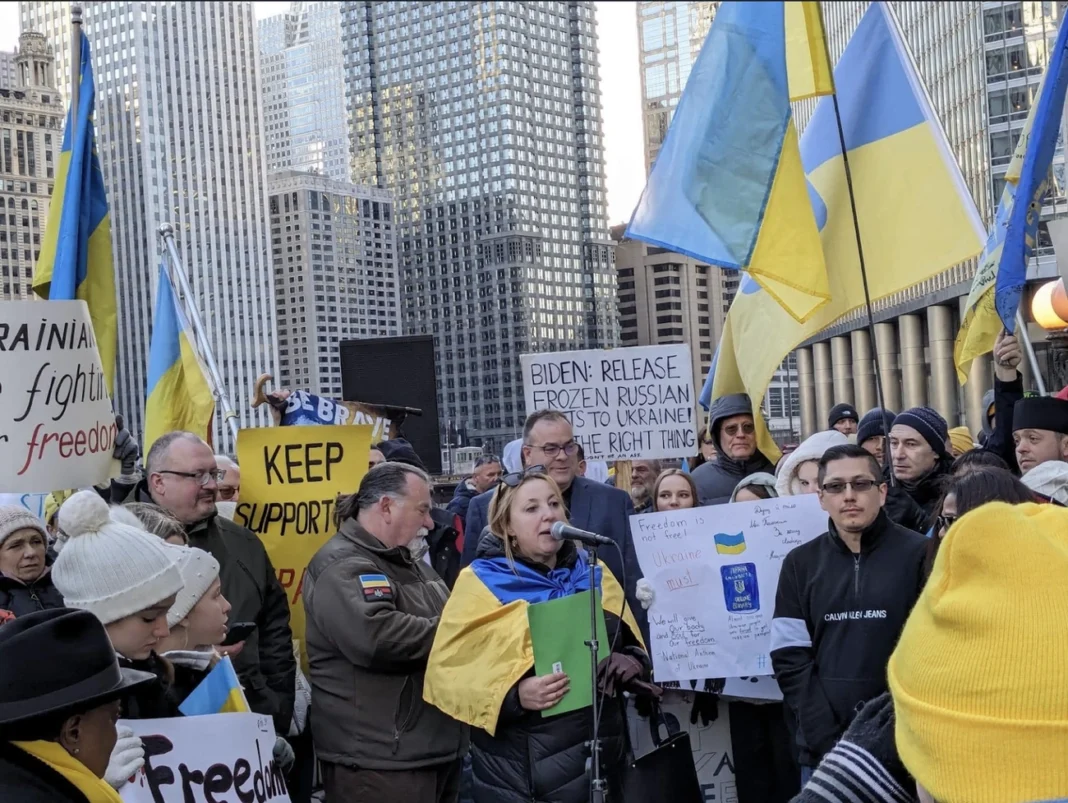
Diaspora populations no longer just send money home in our interconnected world. They have become powerful political actors who utilize their influence to shape both domestic and international policies.
Lobbying in host countries
Diaspora communities actively shape foreign policy by strategic lobbying in their countries of residence. Scholarly literature views these communities as interest groups that support homeland-related policies. Their influence creates both opportunities and challenges for origin countries.
Host countries provide more emergency assistance to immigrants’ home countries after natural disasters. Diaspora communities improve familiarity and attention to homeland events because of their unique position between countries. This creates powerful support channels.
The influence works both ways. Research shows migrant groups can increase the likelihood of host countries imposing sanctions on their homelands. This is especially true when you have emigrants from autocratic and human rights-violating countries who don’t shield their homelands from international censure.
Several factors determine if diaspora lobbying works. The Mexican government’s recognition of strategic advocacy stands as a prime example. They hosted the Consultative Council of the Institute for Mexicans Abroad with elected diaspora leaders. Mexican communities achieved meaningful policy influence through this formal structure. “New generations, better prepared educationally” understood “the political rhythms of the U.S. system”.
Voting and dual citizenship
Almost all European countries now allow their nationals to vote from abroad. This shows a fundamental transformation in how nations imagine citizenship beyond territorial boundaries.
Governments promote dual citizenship to maintain diaspora ties and realize their full potential. What people once saw as abandoning one’s “national family” has become a strategic asset. Countries extend dual citizenship rights to encourage expatriates to naturalize in host countries. This increases both their economic prospects and political influence.
Countries use various strategies to boost diaspora voter participation. Romania launched campaigns about émigré voter turnout as part of broader identity-building initiatives. Poland created the “We are 60 million” campaign to involve diaspora voters. However, interviewees said these efforts didn’t adjust to migrant communities’ specific needs.
Diaspora voters show interesting patterns. Research on Moldovan diaspora voting shows migrants choose differently than domestic voters. Their host countries’ political and economic realities influence these decisions.
Diaspora-led civic organizations
Diaspora associations now serve as vital policy intermediaries. African diaspora organizations in The Hague show civic agency by proposing common solutions and collective initiatives for inclusive policy-making. These efforts show the importance of “enacted citizenship” in challenging social and economic exclusion.
Lebanese and Syrian diasporas showcase this progress. They have evolved from remittance senders to “active transnational agents in political, social, and institutional processes”. Progressive governments create formal mechanisms like diaspora desks in ministries and include diaspora representatives in national reconstruction councils.
South Sudanese diaspora organizations offer another compelling example. They help “a lot in providing opinions and policy recommendations in political processes”. Their contributions proved valuable during negotiations, including the Comprehensive Peace Agreement.
These organizations’ growing influence comes from better structural organization and increased donor agency funding. They hold a unique position as bridge builders between North and South to support development in their origin countries.
Technology and networks: the new infrastructure of diaspora power
Digital revolution has rewired how diaspora communities wield influence. New technology provides reliable infrastructure that lets scattered populations work together as unified groups despite their physical separation.
Digital platforms for mobilization
The International Organization for Migration recognized this change by launching iDiaspora, a global engagement hub. This platform lets migrant leaders, governments, entrepreneurs, and organizations share ideas to integrate diasporas into development. Members can sign up through social media to find like-minded people, get resources, and discover ways to help both their home and host communities.
These platforms became crucial during the COVID-19 pandemic. Diaspora groups ran information campaigns, advocacy programs, and fundraising drives. Digital tools helped communities distribute protective equipment and supplies while keeping their communication networks running smoothly. Technology allowed diasporas to strengthen their existing bonds and work with international organizations, governments, and experts.
Social media and live coordination
Social media creates virtual spaces where immigrant communities build and shape their cross-border identities. Digital technology removes time and space barriers, letting diaspora members build shared online spaces that boost both their physical and virtual communities.
Migrants use four key strategies to direct their complex identities on these platforms:
- Regulating separation between home and host cultures
- Managing audience access to cultural content
- Curating shared content to emphasize specific cultural elements
- Integrating offline and online experiences
These methods show how social media and identity formation work together, as digital platforms shape how diasporas balance their dual belongings.
Fintech and cross-border financial flows
Financial technology has changed how diaspora money crosses borders. Banks now offer digital payments, crowdfunding tools, and investment portals that link overseas investors to verified businesses.
The India-Gulf corridor shows this transformation clearly. India’s government uses its Unified Payments Interface (UPI) as a financial diplomacy tool to create instant remittance channels with UAE and Saudi Arabia. UPI launched in the UAE in 2024, allowing Indian travelers to pay at more than 60,000 stores.
Some challenges still exist. Encrypted messaging apps have modernized traditional hawala operations. Operators now use encrypted chats for confirmations and QR codes to create payment proof screenshots. This digital underground shows both opportunities and risks in diaspora’s growing financial influence.
Case studies: when diaspora money changed the game
Three compelling case studies show how diaspora financial power has changed political outcomes where military actions failed.
India’s diaspora in the Gulf
The Indian expatriate community in the UAE numbers about 3.9 million people and makes up nearly 30% of the UAE’s total population. This large presence has turned the Indian diaspora into a major economic force. They now support the Gulf Cooperation Council’s international relations and have gained more visibility worldwide.
Indian influence runs deep in UAE’s vital sectors. The healthcare system relies heavily on more than 25,000 Indian doctors and 55,000 Indian nurses. More than 400,000 children learn at Indian-run schools that help shape future generations. Business giants like Lulu Group, owned by Indians, generate yearly revenues of over AED 26.81 billion.
The money flows beyond the Gulf region. India gets about AED 367.19 billion in yearly remittances, with much coming from Gulf countries. These transfers add roughly 3% to India’s GDP. This creates economic stability that military spending rarely achieves.
Jewish-American support for Israel
Jewish-American donations, which once kept Israel going during its early years, still provide yearly support of AED 7.34 billion. These funds have boosted Israel’s education and health sectors while strengthening its civil society.
The support goes beyond just money. Jewish organizations helped secure American backing for the UN partition vote that led to Israel’s creation. During the 1956 Suez Crisis, American Jewish groups ran media campaigns to highlight security threats to Israel. This shows how diaspora advocacy can shape international policy.
All the same, the relationship faces some hurdles. Growing differences between Israel and American Jewish communities might reduce US public and political support over time.
The Tamil diaspora and Sri Lanka
The Tamil diaspora changed significantly after the Liberation Tigers of Tamil Eelam’s (LTTE) military defeat in 2009. This community of over one million people stopped funding armed conflict and became an independent political force pushing for separation through political channels.
New organizations emerged to promote Tamil interests to politicians and international bodies in their host countries. These groups worked independently and sometimes clashed with local Tamil politicians who sought reconciliation within Sri Lanka.
The diaspora’s financial networks still hold considerable sway. Though these networks weakened after LTTE’s defeat, they remain active and continue to shape Sri Lanka’s political landscape. This shows how diaspora money stays influential long after military conflicts end, moving from funding fighters to supporting political advocacy and economic growth.
Policy implications: what governments must do now
Diaspora communities have emerged as significant geopolitical players, and governments worldwide now recognize the need to develop resilient policy frameworks that make use of their potential. A transformation from military might to diaspora-driven development requires strategic policy responses in multiple domains.
Engaging diaspora through formal channels
Many governments now create dedicated institutional frameworks that involve their diaspora communities. Countries experiencing high emigration levels set up ministry-level diaspora entities or comprehensive government strategies that connect economic, social and cultural interventions. Egypt’s Ministry of Emigration and Egyptian Expatriate Affairs collaborates with other ministries to promote economic and human development by attracting contributions from Egyptians abroad. Morocco’s Ministry for Moroccans Abroad, under the Minister of Foreign Affairs, has signed several cooperation agreements that focus on cross-border recognition of skills.
Balancing diaspora influence with national interests
Building strong diaspora relationships requires addressing valid concerns about representation and different priorities. Strong partnerships can deliver substantial development benefits through active listening and understanding of diverse diaspora communities’ priorities and capabilities. Countries should develop national “whole of government” approaches on migration to create a more coherent policy environment. Tunisia’s draft National Migration Strategy includes provisions to reform diaspora institutions aligned with democratic aspirations to build trust.
Creating diaspora-friendly investment policies
Practical investment mechanisms tailored to diaspora investors play a vital role in economic development. Matching funds represent mature diaspora engagement, among venture capital funds and other financing sources. Morocco’s MDM Invest Fund helps entrepreneurship projects for Moroccans residing abroad. Digital payment solutions and investment portals connect diaspora investors to vetted enterprises through advanced fintech infrastructure. Simple regulations for investments help diaspora communities become key drivers of economic growth across borders.
Military dominance has given way to diaspora influence, marking one of the biggest changes in modern geopolitics. Nations once measured their power through weapons and troops. Now, diaspora networks shape world events through economic ties, cultural connections, and political advocacy that achieve what military force cannot.
Money sent home by diaspora communities keeps many developing economies alive. These financial flows stay strong even when markets crash. They create paths to growth that armies and weapons cannot match. Diaspora business leaders also create solutions for problems that span continents. They build jobs and opportunities rarely seen from military spending.
Technology has sped up this change. Digital tools help scattered populations work together as if they were next door. New financial systems have altered how money moves across borders. Diaspora groups can now support their families and invest in businesses faster than ever before.
Look at Indian-Gulf relationships, Jewish-American support for Israel, or Tamil influence in Sri Lanka. These cases show how diaspora money shapes political reality better than military pressure. Smart governments now see their overseas populations as valuable partners instead of distant relatives.
This fundamental change challenges old ideas about national security and global influence. Countries that once cared only about defense spending now know that strong diaspora ties might work better. Success will come to nations that build complete strategies to work with diaspora networks and use their cross-border connections.
The choice between guns and growth has a clear winner for our century. Military strength still matters, but diaspora-led development offers a better route to prosperity and global influence. Nations that grasp this truth will thrive in our connected world.