

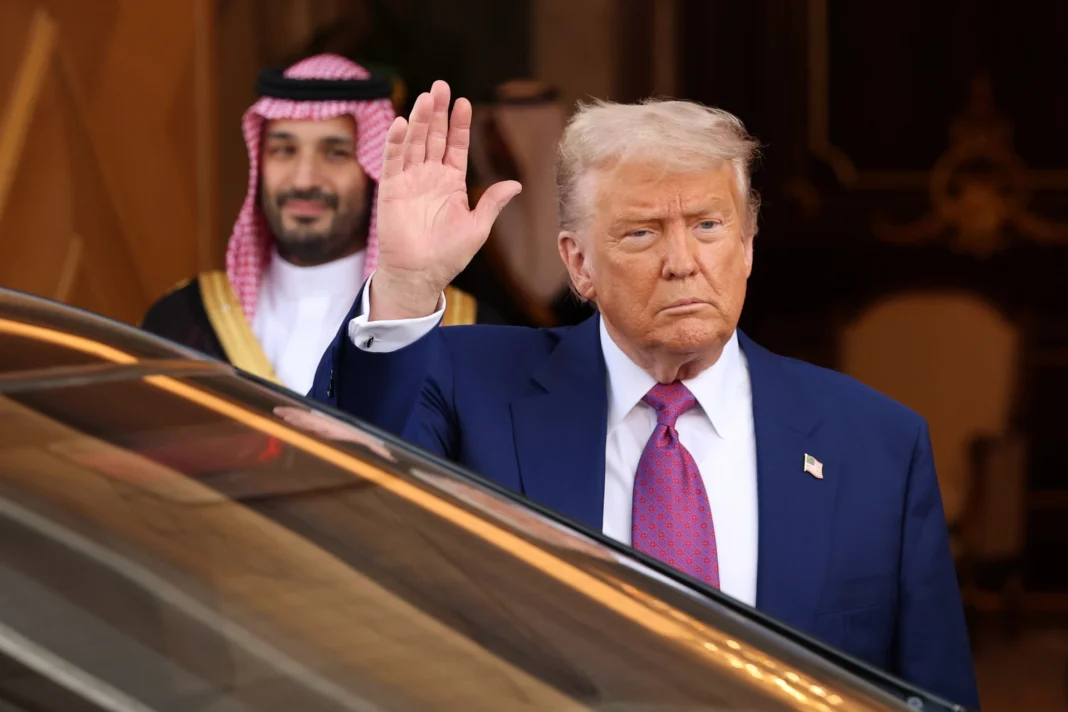
“My own morality. My own mind. It’s the only thing that can stop me.” Trump’s foreign policy echoes a monarch’s declarations, as shown in his statement to The New York Times about what limits his global power. This striking proclamation shows how his leadership philosophy puts personal judgment above institutional guardrails.
White House press secretary Karoline Leavitt’s assertion that a sovereign nation’s “decisions are going to continue to be dictated by the United States of America” reinforces this royal-style mindset. Such philosophy matches what analysts call “neo-royalism” – where international affairs stem not from national interests but from “competing elite groups” centered around political leaders. The administration’s actions point to a forceful revival of the 1823 Monroe Doctrine, which asserts U.S. dominance throughout the Western hemisphere.
This piece delves into Trump’s foreign policy approach’s multiple aspects. It analyzes his perspective on power and morality, military decisions that breathe new life into old doctrines, his administration’s disregard for legal frameworks, and how this royal-style leadership affects global dynamics.
Trump’s View of Power and Morality

Trump’s core belief about presidential power shapes his entire approach to global affairs. His interview with The New York Times revealed something striking – he believes his personal moral code is the only thing that limits his authority. This shows a leadership style that puts individual judgment at the heart of international relations.
Trump’s claim: ‘Only my morality can stop me’
This bold statement goes beyond political talk. It reveals a way of governing that puts personal ethics above what the constitution says. Trump sees the presidency as a position with almost unlimited power, especially in dealing with other countries. His beliefs match what experts call the “unitary executive theory,” which gives presidents broad control over foreign policy with little oversight from Congress.
Other presidents have held similar views, but Trump’s direct statement sets him apart. He made himself the only judge of right and wrong, bypassing the usual limits on presidential power.
How this mindset shapes foreign policy decisions
Trump’s morality-based approach shows up in foreign policy through bold, one-sided actions. His team prefers direct action over diplomatic talks. They often take military action without much discussion with Congress or allies.
This way of thinking values clear displays of power over building partnerships or working with other countries. Foreign policy becomes an extension of personal choice. Trump bases decisions on his own read of situations rather than working through normal diplomatic channels or building agreement.
The role of personal judgment over institutional checks
Personal judgment takes center stage in how foreign policy decisions happen. The usual safeguards – Congress approval, agency processes, diplomatic rules – are seen as roadblocks rather than vital checks on power.
The Constitution gives Congress war powers, but Trump treats these as formalities he can work around. This creates a system where foreign policy decisions come straight from the White House. The president’s judgment matters more than shared governance.
This concentrated power makes foreign policy look more like a monarchy than a republic. It marks a clear break from how America handled diplomacy since World War II.
Military Actions and the Monroe Doctrine Revival

The United States executed a dramatic pre-dawn military operation in Venezuela on January 3, 2026. American forces captured President Nicolás Maduro and his wife—an action that sent shockwaves across Latin America. This bold move marked a crucial shift in Trump’s approach to regional influence and became America’s most direct intervention in the hemisphere in decades.
The Venezuela operation and its justification
The administration defended this operation as a counter-narcotics measure. They claimed Maduro flooded American streets with illegal drugs. The US had already launched over 30 strikes against at least 36 vessels in waters off Central and South America between September and December 2025. These strikes killed more than 110 people. Trump warned Colombia, Cuba, and Mexico with similar military action unless they “get their act together”. Notwithstanding that, experts point out the administration’s lack of concrete evidence supporting these drug-related claims.
Reasserting dominance in the Western Hemisphere
This operation matched Trump’s “Trump Corollary” to the Monroe Doctrine—a clear revival of America’s 19th-century policy that asserted US dominance in the Western Hemisphere. Trump’s presidential message in December 2025 declared: “The American people—not foreign nations nor globalist institutions—will always control their own destiny in our hemisphere”. The administration’s national security strategy pledges to “deny non-Hemispheric competitors the ability to position forces or other threatening capabilities, or to own or control strategically vital assets, in our Hemisphere”.
Comparisons to past interventions like Panama
People quickly compared the Venezuela operation to the 1989 US invasion of Panama that captured Manuel Noriega. Both operations share some features: surgical military actions that captured leaders accused of drug trafficking. Key differences emerged though—Panama had over 10,000 US troops stationed there, while the Venezuela operation happened without any permanent military presence. Panama’s intervention received broad regional support, but Venezuela’s operation faced heavy international criticism as a possible violation of international law.
Legal Frameworks and the Bypassing of Norms
Trump’s foreign policy rests on a clever legal framework that aims to expand presidential power. His team has steadily broken down traditional legal safeguards by reinterpreting executive authority in new ways.
Use of outdated DOJ memos to justify actions
The White House brought back controversial legal opinions from decades ago to support unprecedented moves. The Venezuela operation relied heavily on a disputed Justice Department memo from the late 1980s. This memo gives presidents sweeping powers to deploy military forces into foreign countries when they pursue indicted individuals. The administration then pushed aside the Justice Department’s Office of Legal Counsel through an executive order. This order stated that “the president and the attorney general’s opinions on questions of law are controlling on all employees.”
Plenary authority and the sidelining of Congress
Top officials openly embrace “plenary authority” – the idea of complete, absolute power over specific matters without limits. This view comes from a broad interpretation of Article II. They claim the Executive Power clause gives the president extensive foreign affairs powers beyond what’s clearly listed. Cornell Law School’s Legal Information Institute explains that plenary authority means “power that is wide-ranging, broadly construed, and often limitless for all practical purposes.”
Redefining military actions as law enforcement
A clever legal strategy has emerged – military operations now get labeled as law enforcement actions. The Venezuela strike wasn’t presented as warfare needing Congress’s approval. Instead, it became a law enforcement operation to capture an indicted person. Executive orders have also pushed for more “provision of excess military and national security assets in local jurisdictions to assist State and local law enforcement.”
Trump’s executive orders limiting legal oversight
New executive orders have removed many accountability measures. The administration suspended enforcement of the Foreign Corrupt Practices Act – known as “the crown jewel in the U.S.’s fight against global corruption.” They also ordered reviews of consent decrees that tackle systemic police misconduct. One order created legal defense and protection for law enforcement officers. This shields them from personal liability, even in civil rights cases.
Global Implications of a Royal-Style Foreign Policy
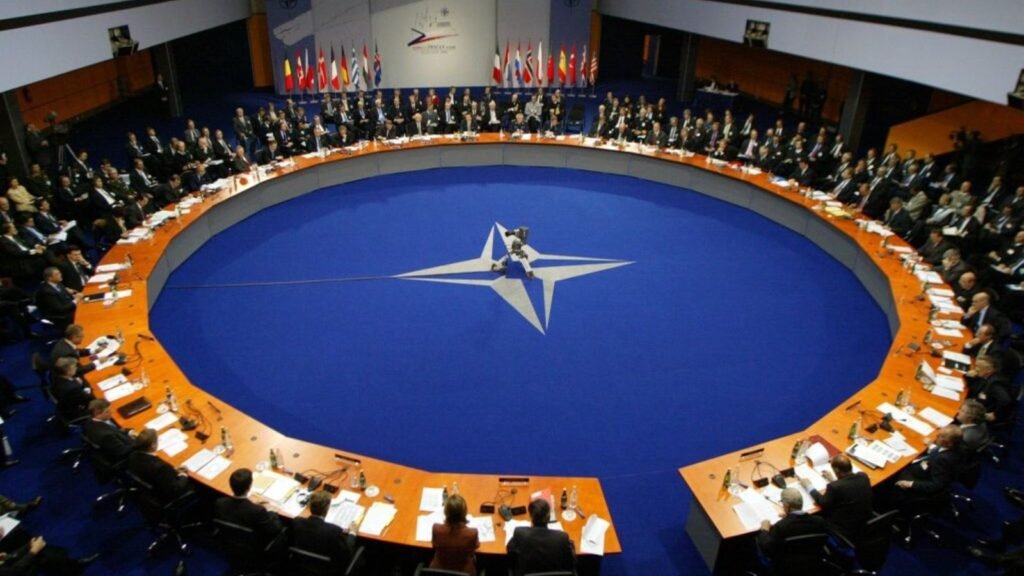
“We defend everybody.” — Donald J. Trump, Former and Incoming U.S. President, architect of America First foreign policy
Trump’s handling of international affairs has released shockwaves throughout the global world. European leaders describe his administration’s foreign policy as “a hostile attitude from the U.S. toward Western Europe unseen since the end of World War II”.
Effect on NATO and European alliances
Transatlantic relations showed signs of weakness after Trump questioned NATO’s reliability by stating “I DOUBT NATO WOULD BE THERE FOR US IF WE REALLY NEEDED THEM”. His administration threatened to take Greenland forcefully from Denmark—a fellow NATO member. This created an unprecedented scenario where one alliance member might attack another. Denmark’s military intelligence services subsequently classified the U.S. as a potential threat to its national security for the first time.
Moving from rules-based to power-based diplomacy
Trump’s administration rejected the foundations of the post-war international order outright. His explicit statement “I don’t need for international law” signals a fundamental change toward what his aide Stephen Miller calls “a world governed by strength, force, and power”. Such an approach violates fundamental UN Charter principles, particularly Article 2(4) which prohibits threats or use of force against territorial integrity.
Other nations’ responses to this change
Major powers have adapted quickly to this new reality. Russia defends its territorial aggression by pointing to Western inconsistencies. China dismisses legal judgments about maritime disputes as selectively enforced. European nations have strengthened their defense commitments and developed the SAFE program while proposing a European Defense Union.
The decline of international norms and institutions
Trump’s administration withdrew from 66 international organizations, including 31 UN entities. This represents the most dramatic institutional retreat in modern history. The dismantling includes the UN Framework Convention on Climate Change—the core treaty behind the Paris Agreement. “Precedence turns into permission” when legitimacy loses its value. This creates a world where rules become optional and power dictates outcomes alone.
Conclusion
Trump’s foreign policy marks a radical alteration in American diplomatic tradition. His belief that only his “own morality” can limit his power points to a leadership style that lines up with monarchical rule rather than democratic principles. The Venezuela operation shows this royal-style leadership at work and brings back the Monroe Doctrine’s claim of American dominance across the Western Hemisphere.
Legal frameworks that once served as vital guardrails of presidential power now face systematic dismantling. The administration bypasses congressional oversight by recasting military actions as law enforcement operations. They justify unprecedented interventions through outdated legal opinions.
These changes have deep global effects. NATO alliances grow more fragile while international institutions crumble. The rules-based order built after World War II gives way to power-based diplomacy. Other nations adapt – some build stronger regional alliances, while others copy this new approach that values strength over legal limits.
This royal-style leadership has turned American foreign policy into an extension of personal will instead of national values or interests. These changes will reshape international relations for decades, whatever future administrations do to rebuild weakened institutional guardrails. Trump’s approach stands out as a dramatic break from post-war American diplomatic traditions. It puts personal judgment, unilateral action, and shows of power ahead of alliance-building, multilateral cooperation, and respect for global norms.