

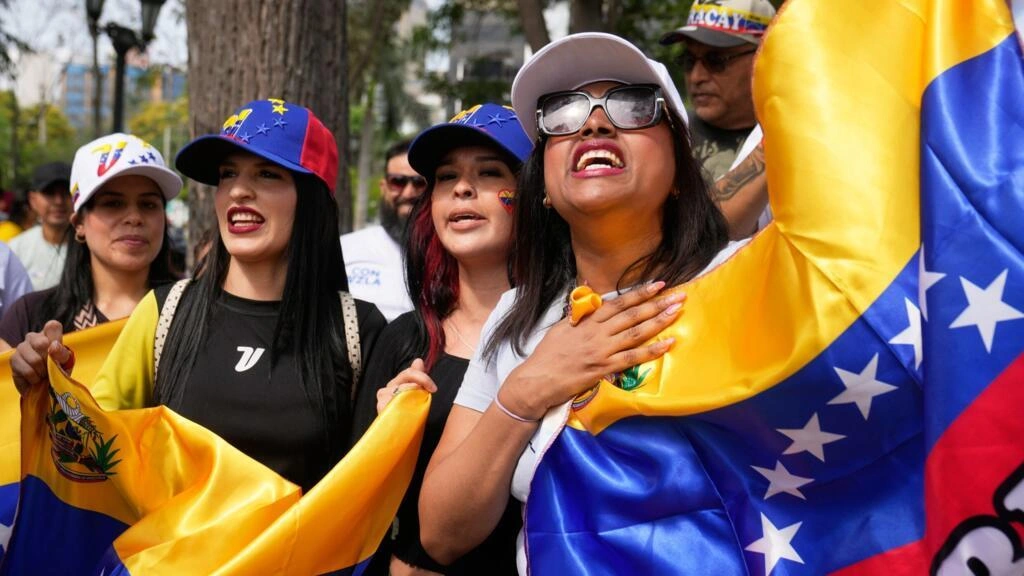
Nearly eight million Venezuelans left their homeland after Nicolas Maduro took power. Their mass exodus created the world’s largest scattered nation, and these people now watch with mixed feelings as their former president meets an unexpected fate. US special forces captured Maduro during a raid on Caracas, which sent shockwaves through Venezuelan communities worldwide. US authorities moved Maduro and his wife to New York City where they face drug trafficking and weapons charges. Most exiles feel cautiously hopeful about their country’s future.
A top US diplomat called this moment “a new dawn for Venezuela”, yet the situation seems more complex. Most Venezuelans see Maduro as “the leader of a criminal system that led our country into disaster”. Some officials point out that “There has been no change of regime in Venezuela, there is no transition”. This stark reality shows the uncertainty that Venezuela and its scattered citizens face. They stand between celebration and caution as they wonder what Maduro’s capture means for their homeland’s future.
Exiles celebrate Maduro’s capture but remain cautious
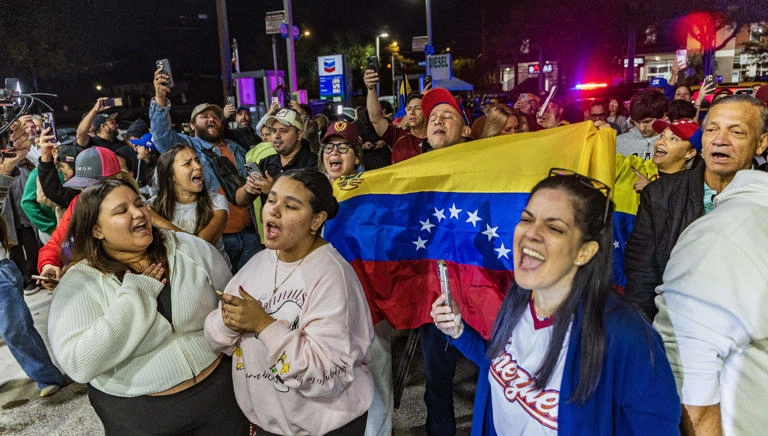
Venezuelan flags filled the streets of Miami, Madrid, Bogotá and other cities with large Venezuelan communities as news of Maduro’s capture spread. Exiles gathered spontaneously to celebrate, their tears flowing freely as they sang their national anthem. The moment represented a possible breakthrough for these communities who had watched their homeland crumble over the last several years.
“This feels like the beginning of hope,” remarked Maria Gonzalez, who fled Venezuela in 2017. “Yet many of us worry about what happens next.”
Joy mixed with caution defines the exile community’s response. Many remain doubtful about quick improvements to Venezuela’s situation. The circumstances of Maduro’s capture by US forces, rather than through internal political change, have created additional uncertainty.
“We’ve seen false dawns before,” noted Carlos Vecchio, a prominent opposition figure living abroad. “The regime’s structure remains largely intact.”
The possibility of returning home weighs heavily on everyone’s mind. Security concerns and Maduro’s supporters in powerful positions make most exiles hesitant to return right away.
The scattered Venezuelan people’s reaction shows their complex bond with their homeland. They celebrate a dictator’s downfall but understand that their country’s rebuilding needs more than just one person’s removal.
Fear persists as regime loyalists retain power
Armed paramilitary groups known as colectivos now dominate Venezuelan streets despite Maduro’s absence. These motorcycle-riding militia members create an atmosphere of fear and intimidation under Interior Minister Diosdado Cabello’s control. They have set up checkpoints throughout Caracas and stop citizens to check their phones, messages, and social media posts.
“There’s fear. There are armed civilians here. You never know what might happen, they might attack people,” a Caracas resident explained. The emergency decree after Maduro’s capture orders police to “immediately begin the national search and capture of everyone involved in the promotion or support of the armed attack by the United States”.
Acting president Delcy Rodríguez has managed to keep regime continuity. She appointed General Gustavo González López, a former intelligence director with sanctions for rights violations, to lead the Presidential Honor Guard.
Human rights organizations report that over 800 people remain in detention for political reasons, though authorities announced some prisoner releases. The US chose to work with regime loyalists rather than opposition figures because officials worried about potential chaos if they sidelined hardliners like Cabello, who has a $25 million US bounty on his head.
“People, in general, are quieter”, observed a Venezuelan law professor – evidence of the regime’s continued grip on power.
What does a US-led transition mean for Venezuela’s future?
Maduro’s capture by US forces has raised big questions about Venezuela’s sovereignty during this transition period. The US intervention differs from typical regime changes led by internal opposition. This direct involvement makes Washington a vital architect of Venezuela’s political future. Latin American neighbors worry about such unilateral action setting a dangerous example.
Venezuela’s oil wealth plays a most important role in any transition plan. The country owns the world’s largest proven oil reserves. Yet under Maduro’s leadership, production has hit rock bottom. A US-backed transitional government would likely focus on breathing new life into the energy sector through foreign investment and expert help.
Millions of Venezuelans living abroad still don’t know when they can return home. Their journey back needs more than just political stability – it needs a complete economic rebuild. Expert organizations say that fixing Venezuela’s infrastructure and creating working institutions could take decades, even with massive foreign support.
The military’s stance remains the biggest factor in this equation. The armed forces stay loyal to the regime and hold massive power over any transition’s outcome. Without the military’s support, even US-backed plans might hit a wall. This leaves Venezuela’s scattered people stuck between hope and uncertainty.
Nicolas Maduro’s capture marks a turning point for almost eight million Venezuelans living around the world. Notwithstanding that, this dramatic event brings mixed feelings of celebration and uncertainty to the world’s largest displaced population. Most exiles look at this development with careful optimism. They acknowledge the removal of a leader they blame for their nation’s collapse but know his absence alone won’t heal Venezuela’s deep wounds.
Of course, joyful crowds gathered in Miami, Madrid, and Bogotá when news of Maduro’s arrest spread. These emotional gatherings showed how deeply exiles still care about their homeland even after years or decades away. A complex reality lies beneath the celebrations though – the regime’s power structure stays mostly intact, with armed supporters still controlling the streets and key institutions.
This US-led intervention’s unprecedented nature makes Venezuela’s path forward more complicated. The country faces big questions about sovereignty, international legitimacy, and true democratic change as it tries to rebuild. The Venezuelan military will decide if this moment starts a new chapter or just continues the same story with different leaders.
The scattered Venezuelan nation sees Maduro’s capture not as an end but as another challenging phase in their collective trip. Their homeland needs more than just removing one person to fix its massive oil resources, broken infrastructure, and divided political world – whatever his role was in making them leave. Millions still can’t see a clear path home despite this most important change.
Venezuela’s future remains uncertain. Maduro now faces justice thousands of miles from Caracas, but his legacy of authoritarian rule, economic failure, and humanitarian crisis lives on. The world’s largest scattered nation watches their homeland with new hope mixed with careful expectations. They wait to see if real change – not just new leadership – might finally let them return to the country they had to leave behind.